AI-Driven University Admission System
AI-Driven University Admission System
AI-Driven University Admission System
Title: AI-Driven University Admissions System
Objective:
Streamline the student application process by automating sorting, ranking, and scholarship recommendations using AI.
Target Users:
University professors and admission offices.
Key Outcomes:
✔ Reduced manual review time by 50% ✔ Improved accuracy in ranking candidates ✔ Increased fairness & transparency in AI-driven decisions.
My Role:
UX Designer & User Researcher.
As a UX Designer & User Researcher, I was responsible for:
✔ Conducting user research to understand the workflow and challenges faced by admission officers. ✔ Developing user personas and journey maps to enhance the user experience. ✔ Designing wireframes and interactive prototypes in Figma to ensure an intuitive and user-friendly interface. ✔ Creating a dashboard layout optimized for efficiency, with clear AI insights and applicant rankings. ✔ Implementing usability testing to refine the system for better clarity and accessibility. ✔ Ensuring the interface aligns with ethical AI principles, making the decision-making process fair and transparent.
Title: AI-Driven University Admissions System
Objective:
Streamline the student application process by automating sorting, ranking, and scholarship recommendations using AI.
Target Users:
University professors and admission offices.
Key Outcomes:
✔ Reduced manual review time by 50% ✔ Improved accuracy in ranking candidates ✔ Increased fairness & transparency in AI-driven decisions.
My Role:
UX Designer & User Researcher.
As a UX Designer & User Researcher, I was responsible for:
✔ Conducting user research to understand the workflow and challenges faced by admission officers. ✔ Developing user personas and journey maps to enhance the user experience. ✔ Designing wireframes and interactive prototypes in Figma to ensure an intuitive and user-friendly interface. ✔ Creating a dashboard layout optimized for efficiency, with clear AI insights and applicant rankings. ✔ Implementing usability testing to refine the system for better clarity and accessibility. ✔ Ensuring the interface aligns with ethical AI principles, making the decision-making process fair and transparent.
Title: AI-Driven University Admissions System
Objective:
Streamline the student application process by automating sorting, ranking, and scholarship recommendations using AI.
Target Users:
University professors and admission offices.
Key Outcomes:
✔ Reduced manual review time by 50% ✔ Improved accuracy in ranking candidates ✔ Increased fairness & transparency in AI-driven decisions.
My Role:
UX Designer & User Researcher.
As a UX Designer & User Researcher, I was responsible for:
✔ Conducting user research to understand the workflow and challenges faced by admission officers. ✔ Developing user personas and journey maps to enhance the user experience. ✔ Designing wireframes and interactive prototypes in Figma to ensure an intuitive and user-friendly interface. ✔ Creating a dashboard layout optimized for efficiency, with clear AI insights and applicant rankings. ✔ Implementing usability testing to refine the system for better clarity and accessibility. ✔ Ensuring the interface aligns with ethical AI principles, making the decision-making process fair and transparent.
Interactive Features
Automated Application Sorting & Ranking
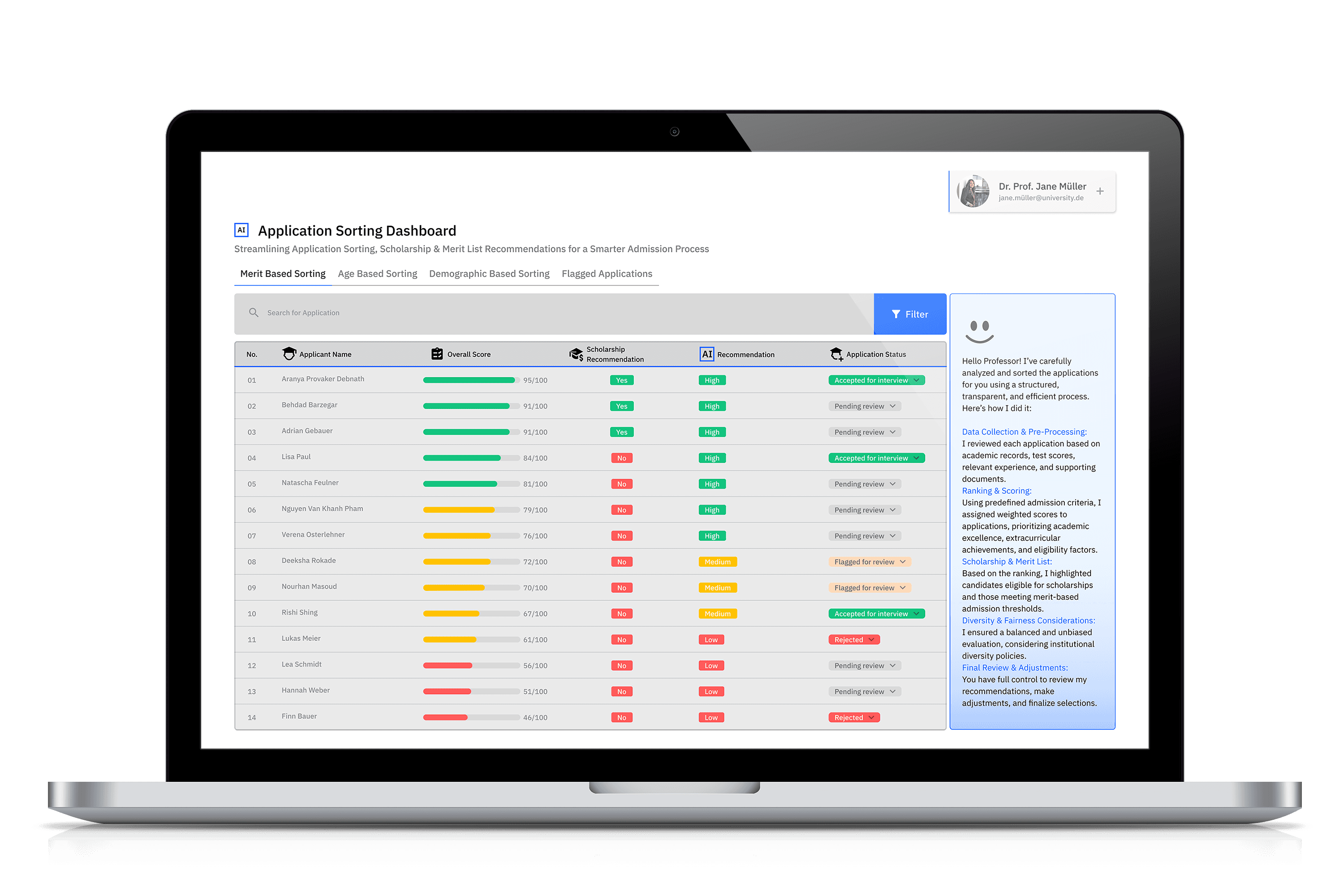
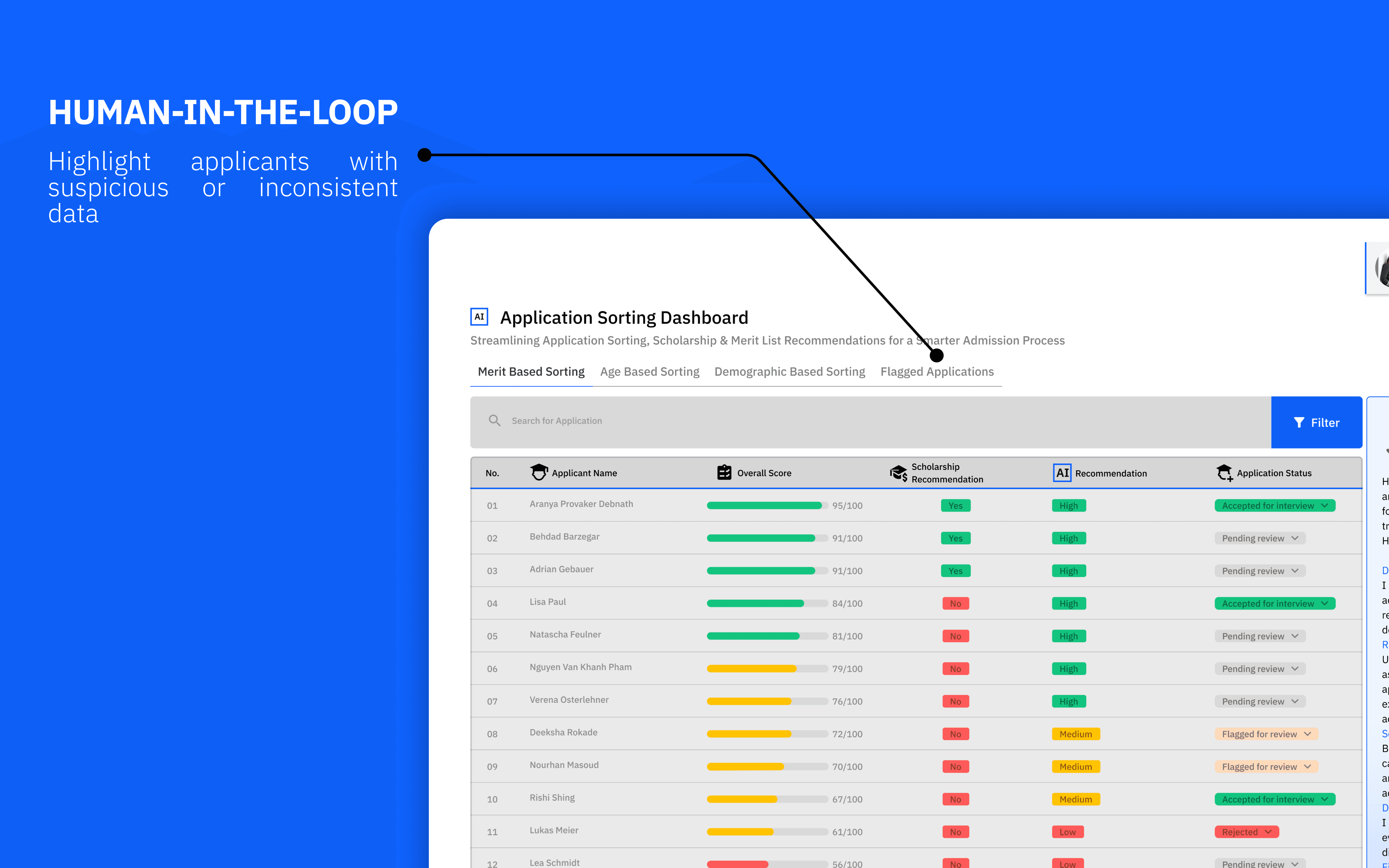
AI analyzes and ranks applications based on academic records, extracurriculars, and university criteria. It reduces manual workload, ensuring a fair and data-driven selection process while minimizing bias.
AI-Powered Scholarship Recommendations
The system evaluates applications against scholarship criteria, considering merit and financial need. It provides tailored recommendations, ensuring fair distribution and efficient funding allocation.
Transparent & Fair Decision-Making with Human Oversight
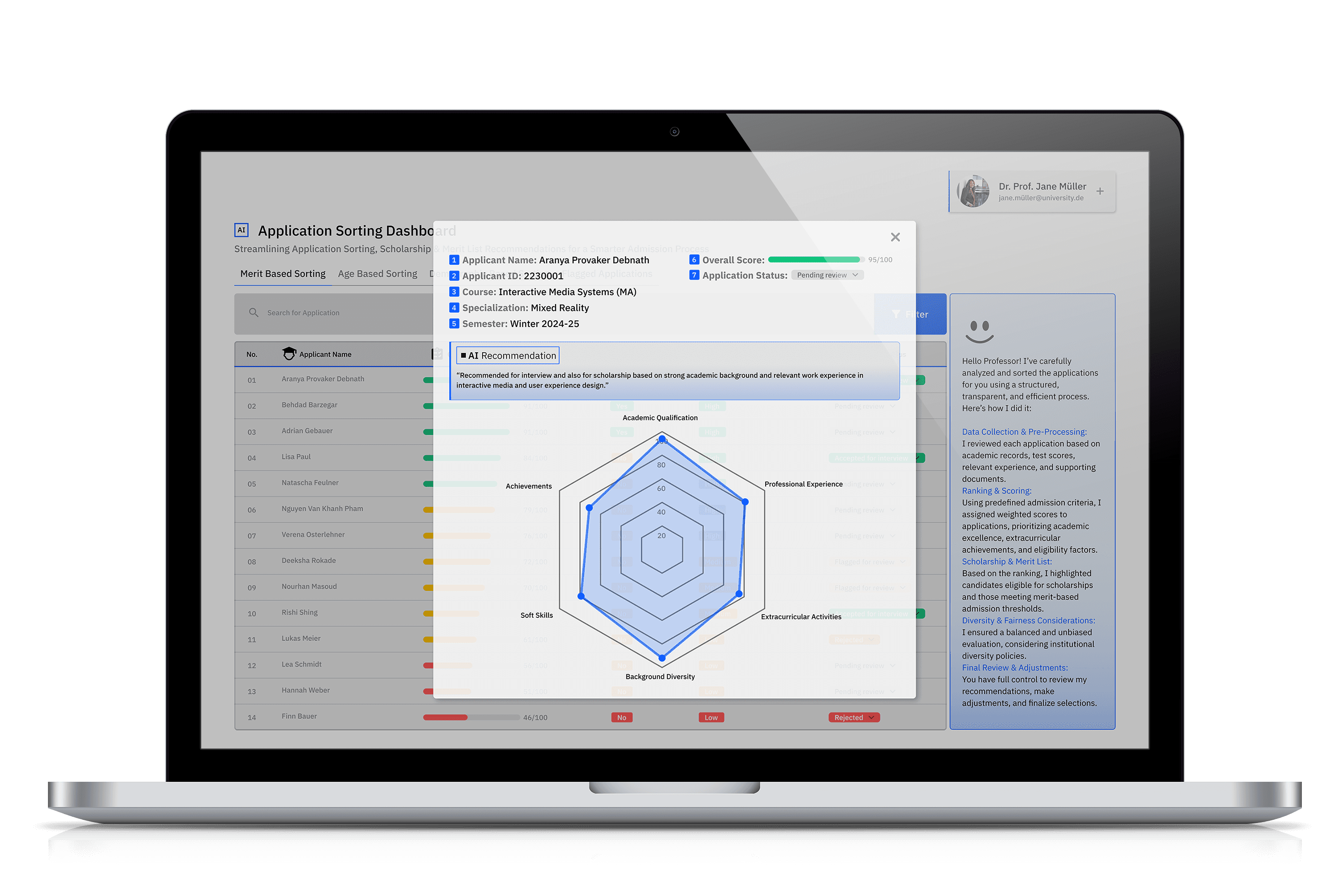
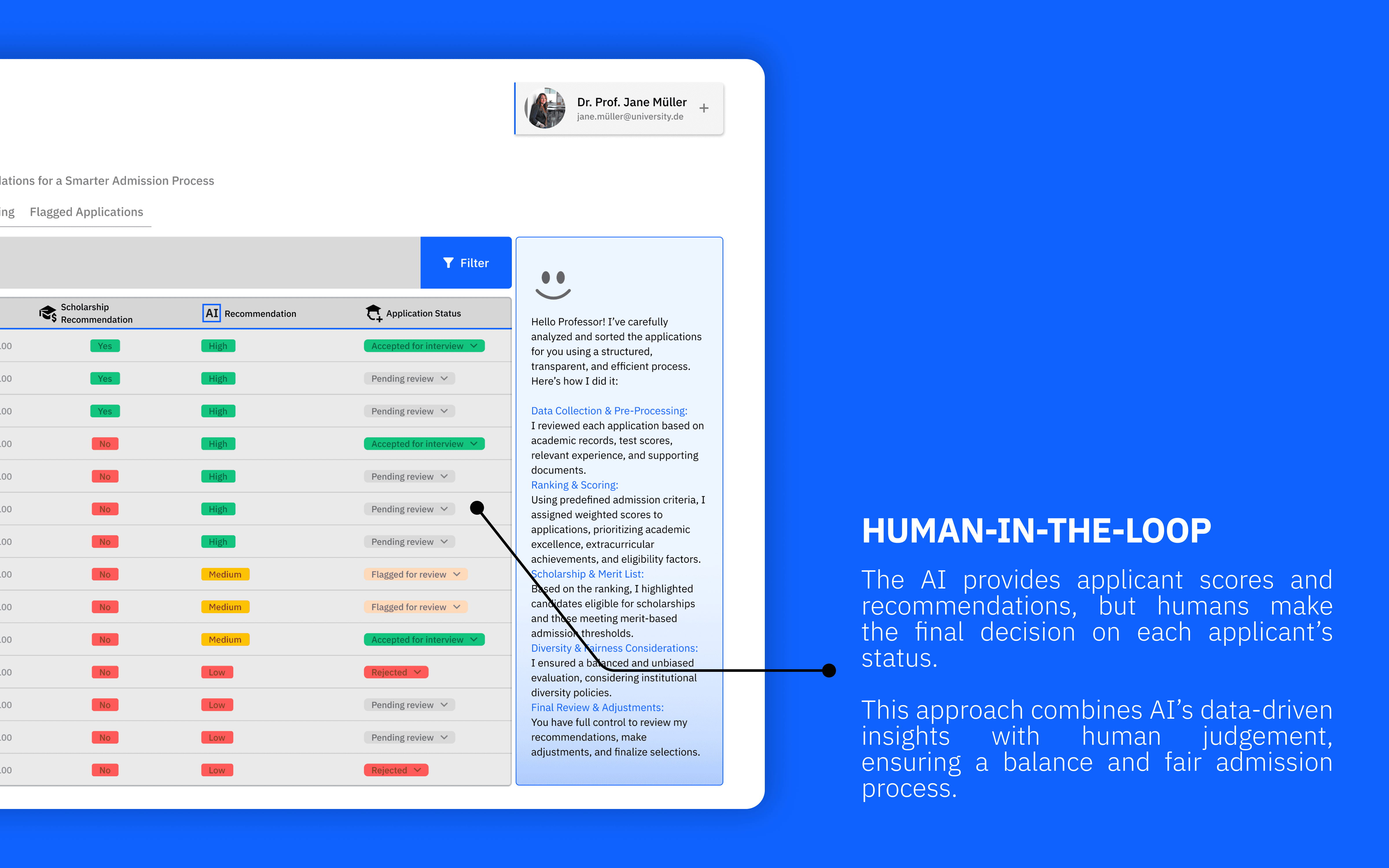
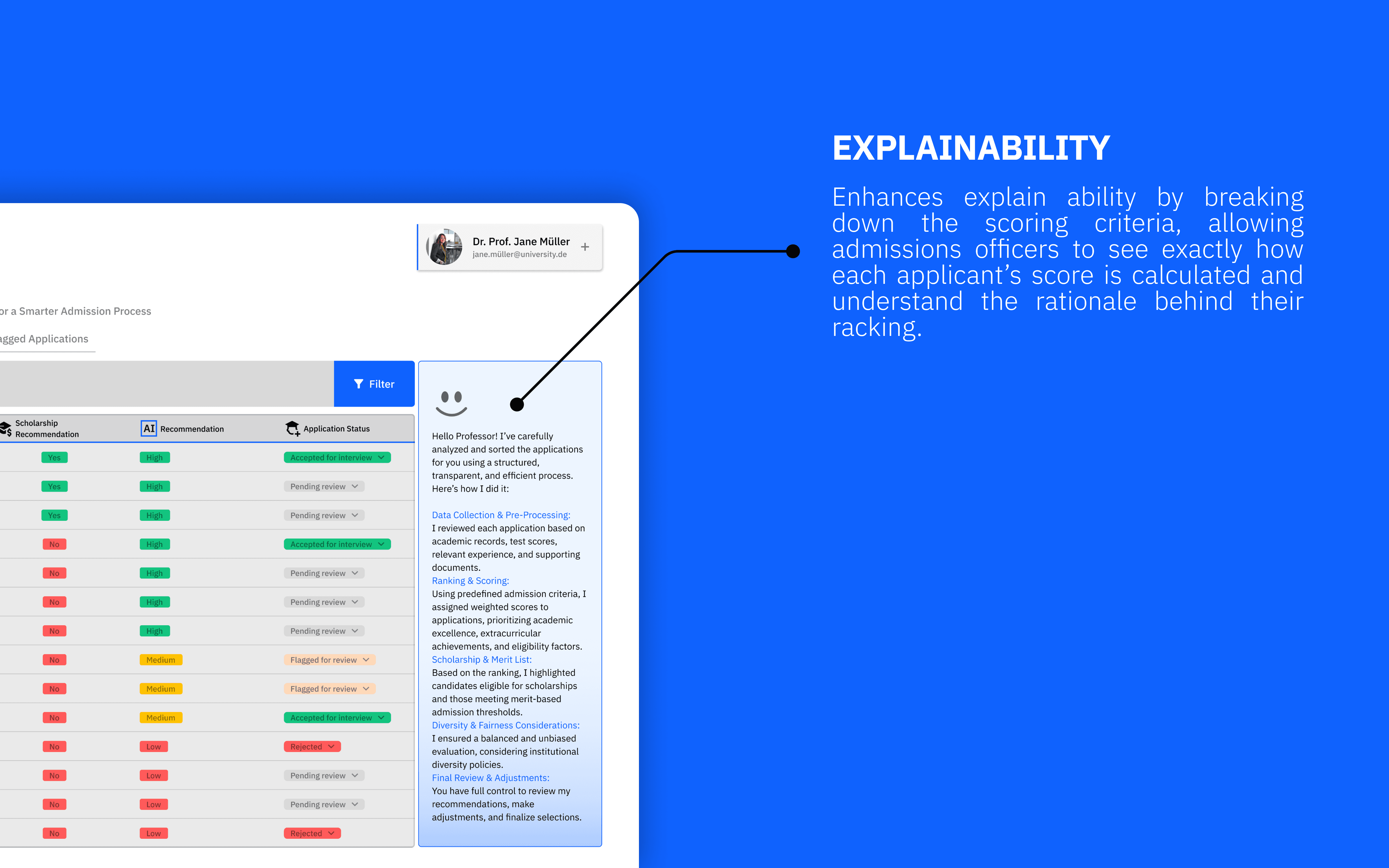
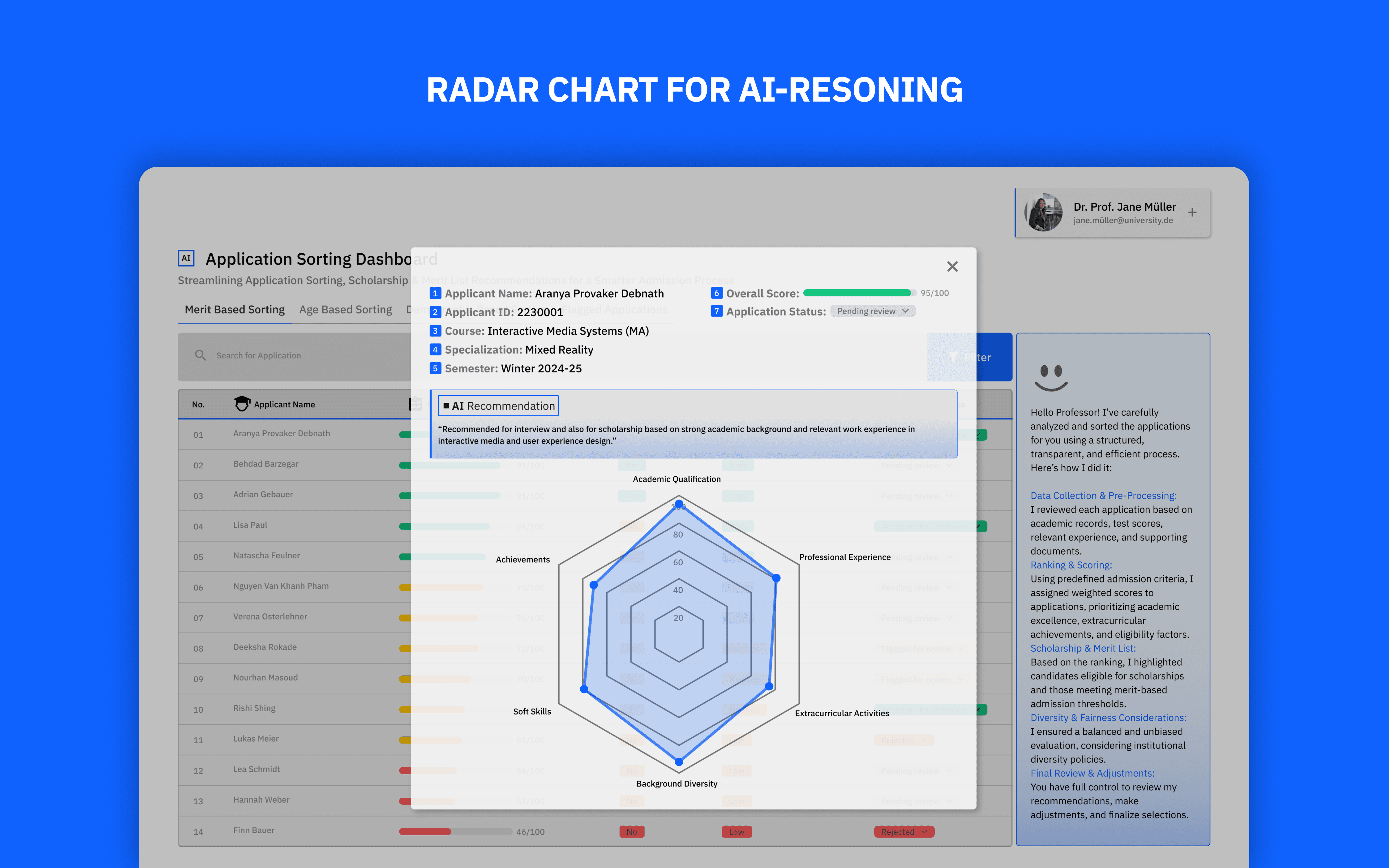
AI-driven rankings include visual insights like spider charts, keeping professors in control. Human oversight ensures fairness, accountability, and ethical decision-making throughout the admissions process.
Interactive Features
Automated Application Sorting & Ranking
AI analyzes and ranks applications based on academic records, extracurriculars, and university criteria. It reduces manual workload, ensuring a fair and data-driven selection process while minimizing bias.
AI-Powered Scholarship Recommendations
The system evaluates applications against scholarship criteria, considering merit and financial need. It provides tailored recommendations, ensuring fair distribution and efficient funding allocation.
Transparent & Fair Decision-Making with Human Oversight
AI-driven rankings include visual insights like spider charts, keeping professors in control. Human oversight ensures fairness, accountability, and ethical decision-making throughout the admissions process.
Interactive Features
Automated Application Sorting & Ranking
AI analyzes and ranks applications based on academic records, extracurriculars, and university criteria. It reduces manual workload, ensuring a fair and data-driven selection process while minimizing bias.
AI-Powered Scholarship Recommendations
The system evaluates applications against scholarship criteria, considering merit and financial need. It provides tailored recommendations, ensuring fair distribution and efficient funding allocation.
Transparent & Fair Decision-Making with Human Oversight
AI-driven rankings include visual insights like spider charts, keeping professors in control. Human oversight ensures fairness, accountability, and ethical decision-making throughout the admissions process.
Our Design Thinking Process
1. Empathize – Understanding Needs
✔ Interview professors, admission officers, and students to identify pain points in admissions. ✔ Address concerns around bias, transparency, and workload reduction.
2. Define – Problem & Goals
Problem: Manual admissions are time-consuming, and students seek fairness. Goals: Ensure efficient, unbiased AI decisions with human oversight.
3. Ideate – AI-Powered Solutions
✔ Automate sorting, ranking, and scholarship recommendation. ✔ Implement explainable AI (XAI) with spider charts for visual insights. ✔ Include "Human-in-the-loop" for decision adjustments.
4. Prototype – Building the System
✔ Design a user-friendly dashboard in Figma. ✔ Develop AI logic based on merit, diversity, and eligibility. ✔ Add override controls for human validation.
5. Test – Ensuring Fairness & Usability
✔ Validate AI results with admission officers and historical data. ✔ Conduct bias testing and refine explanations for AI decisions. ✔ Gather feedback for continuous improvement.

Our Design Thinking Process
1. Empathize – Understanding Needs
✔ Interview professors, admission officers, and students to identify pain points in admissions. ✔ Address concerns around bias, transparency, and workload reduction.
2. Define – Problem & Goals
Problem: Manual admissions are time-consuming, and students seek fairness. Goals: Ensure efficient, unbiased AI decisions with human oversight.
3. Ideate – AI-Powered Solutions
✔ Automate sorting, ranking, and scholarship recommendation. ✔ Implement explainable AI (XAI) with spider charts for visual insights. ✔ Include "Human-in-the-loop" for decision adjustments.
4. Prototype – Building the System
✔ Design a user-friendly dashboard in Figma. ✔ Develop AI logic based on merit, diversity, and eligibility. ✔ Add override controls for human validation.
5. Test – Ensuring Fairness & Usability
✔ Validate AI results with admission officers and historical data. ✔ Conduct bias testing and refine explanations for AI decisions. ✔ Gather feedback for continuous improvement.
Our Design Thinking Process
1. Empathize – Understanding Needs
✔ Interview professors, admission officers, and students to identify pain points in admissions. ✔ Address concerns around bias, transparency, and workload reduction.
2. Define – Problem & Goals
Problem: Manual admissions are time-consuming, and students seek fairness. Goals: Ensure efficient, unbiased AI decisions with human oversight.
3. Ideate – AI-Powered Solutions
✔ Automate sorting, ranking, and scholarship recommendation. ✔ Implement explainable AI (XAI) with spider charts for visual insights. ✔ Include "Human-in-the-loop" for decision adjustments.
4. Prototype – Building the System
✔ Design a user-friendly dashboard in Figma. ✔ Develop AI logic based on merit, diversity, and eligibility. ✔ Add override controls for human validation.
5. Test – Ensuring Fairness & Usability
✔ Validate AI results with admission officers and historical data. ✔ Conduct bias testing and refine explanations for AI decisions. ✔ Gather feedback for continuous improvement.
Use Case
We'll improve admission process for university
For admission office/professors.
To reduce manual process and student shortlisting/reviewing/interviewing.
By designing an AI system which will help by scoring/ranking/recommending.
In order to increase efficiency and optimizing reviewing process.
AI Intents
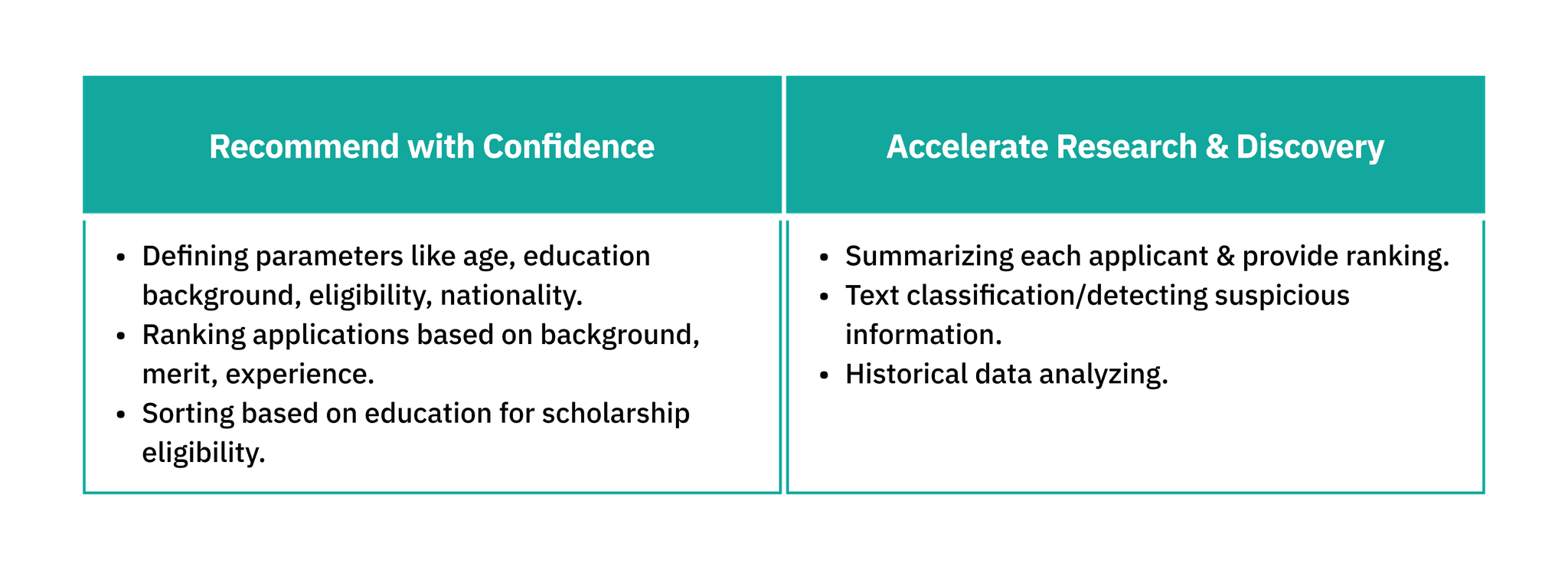
AI Intents
AI Intents
Trustworthy AI Pillers
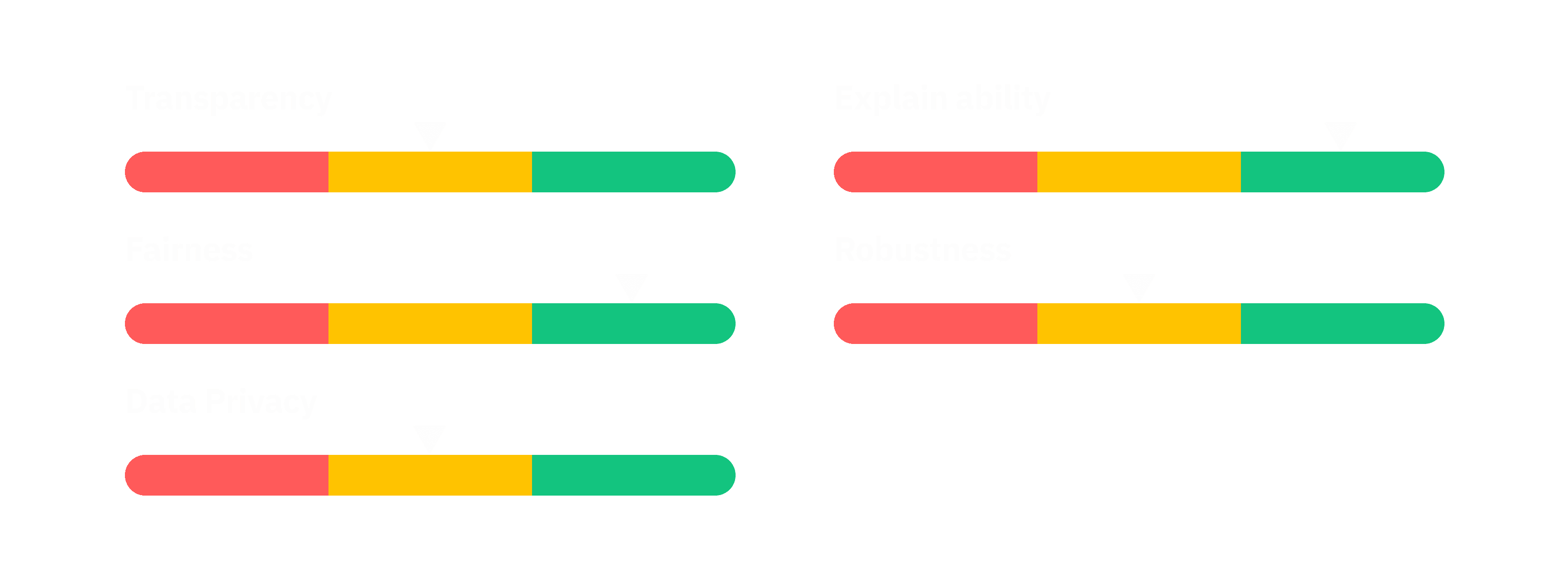
Trustworthy AI Pillers
Trustworthy AI Pillers
User Journey
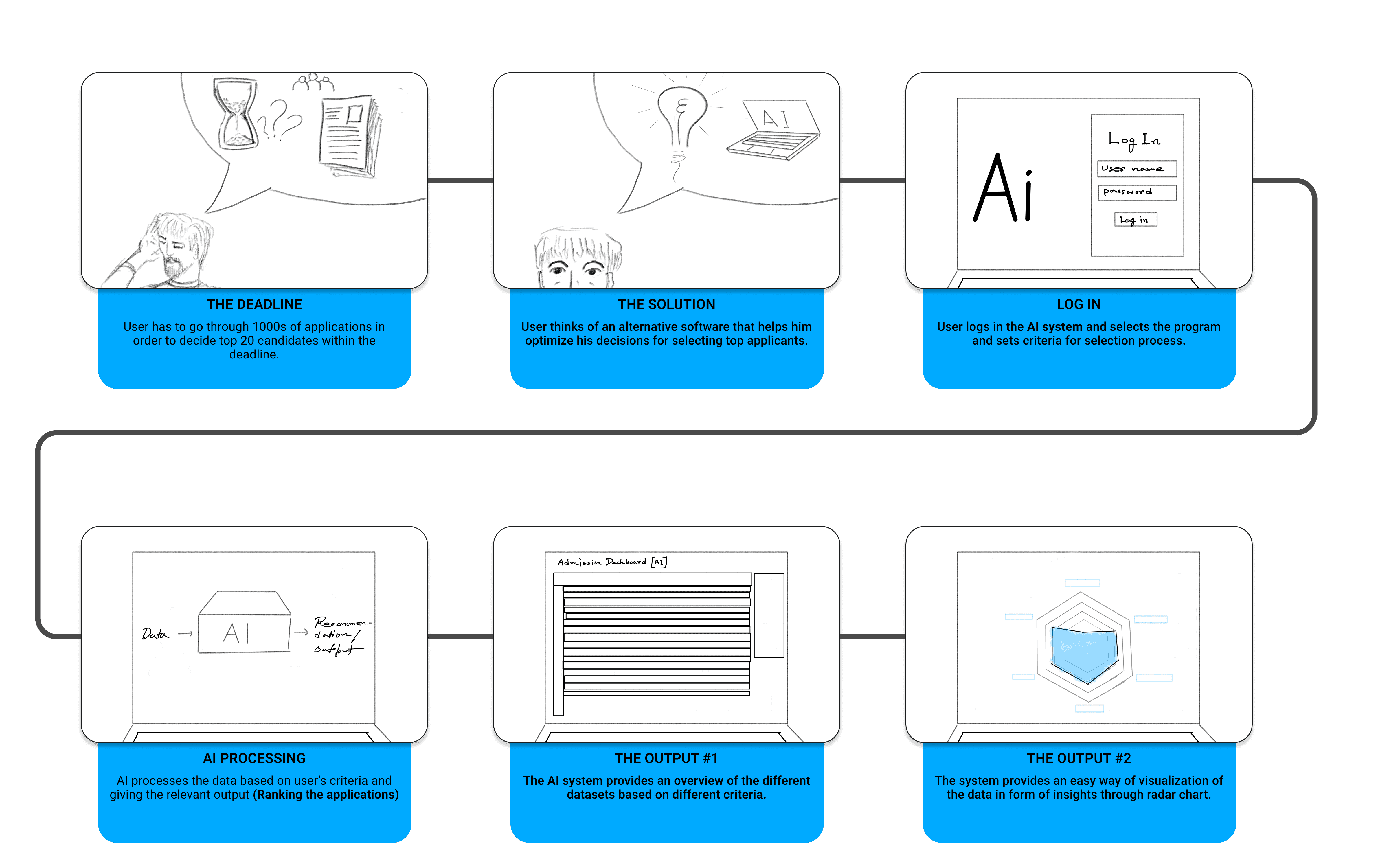
User Journey
User Journey
Lo-Fi Prototype
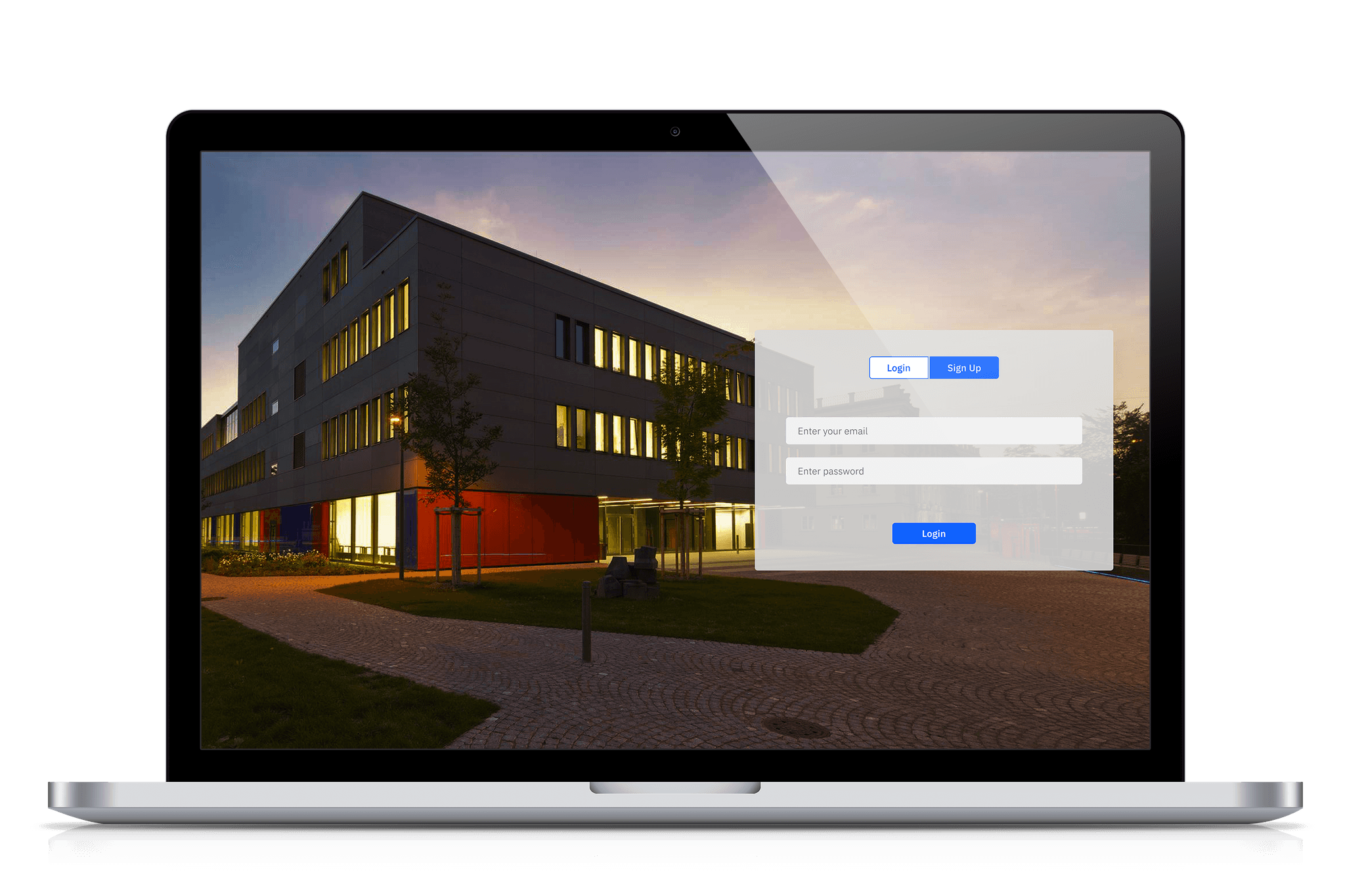
Login

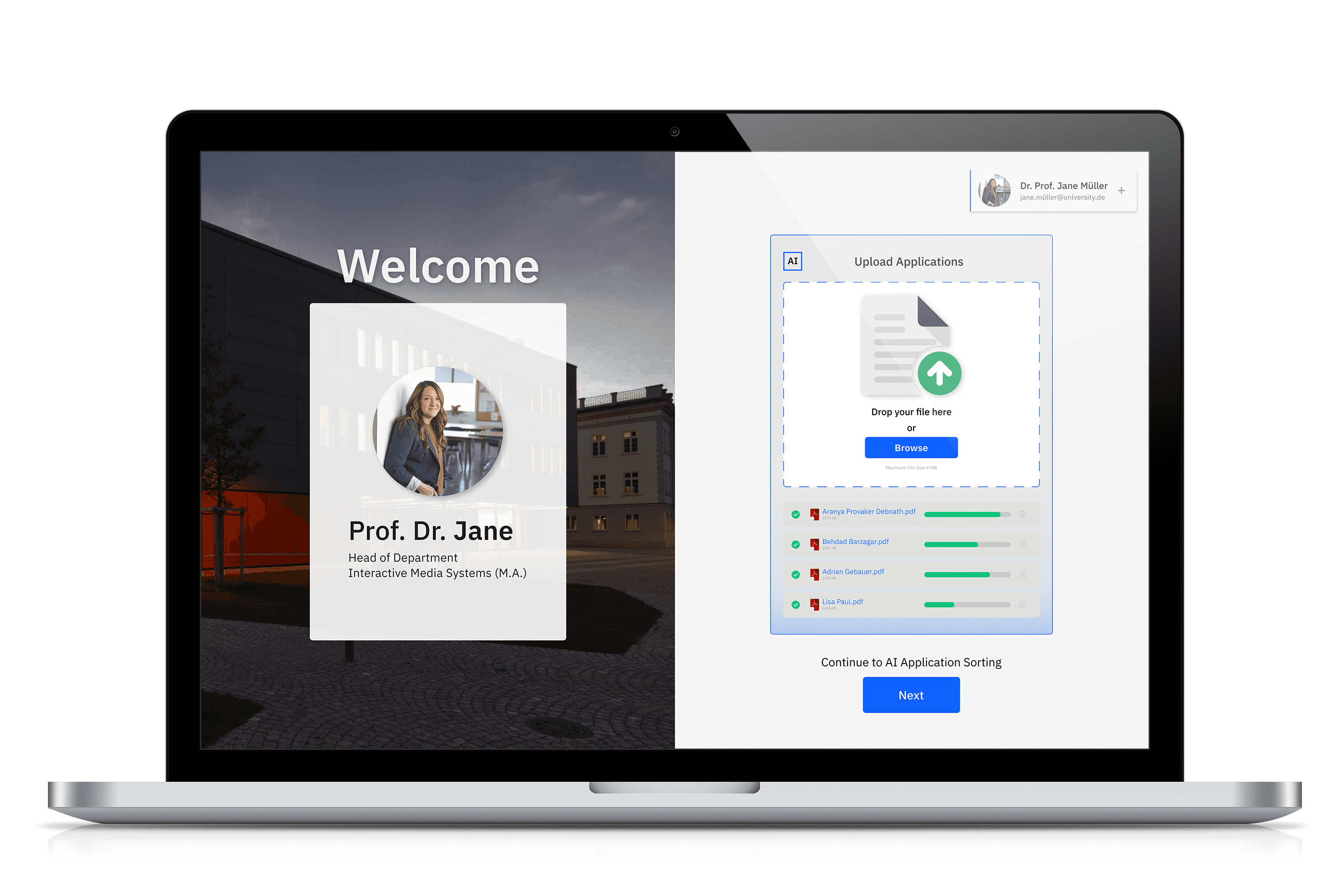
Document Upload

AI Sorting & Ranking
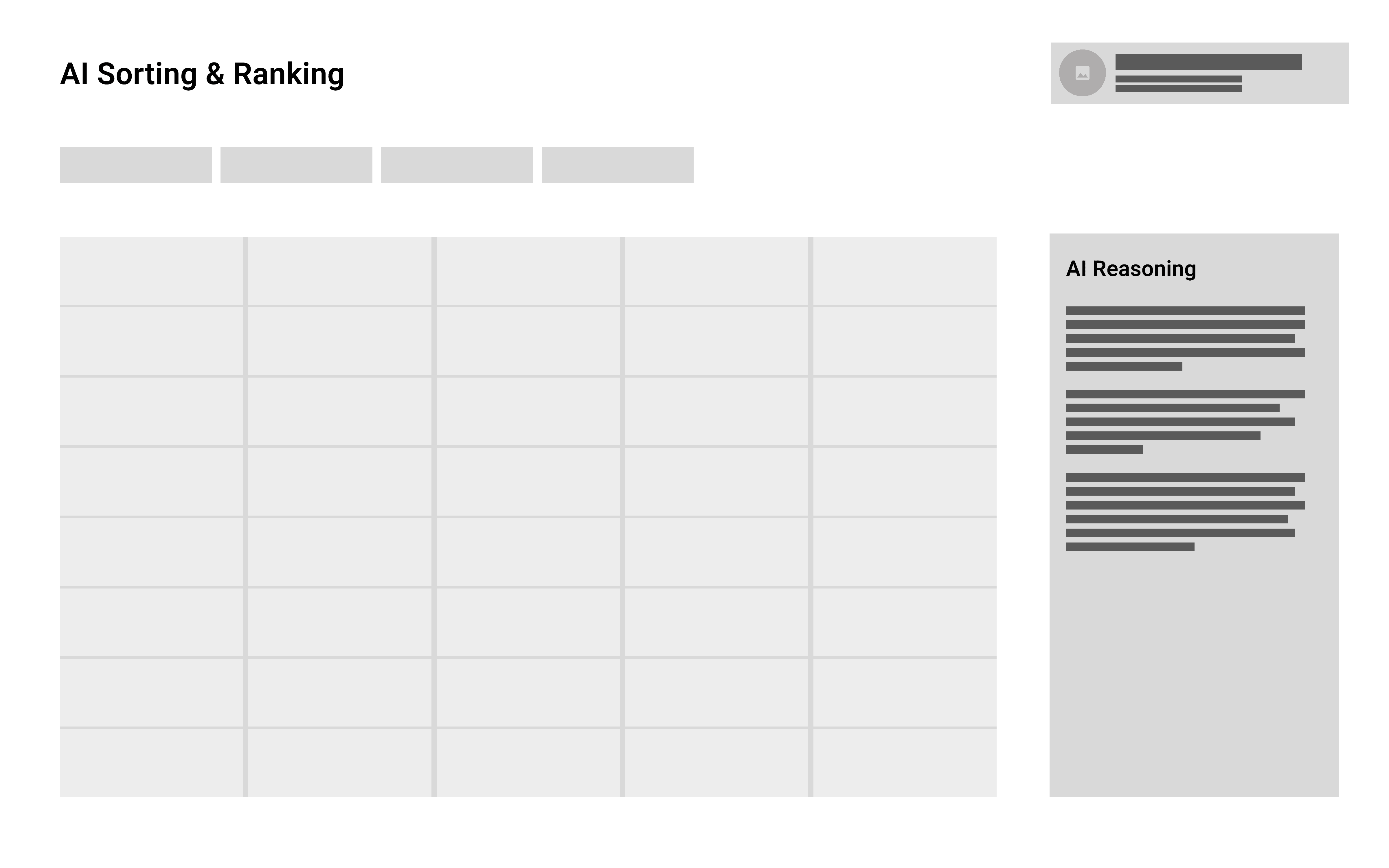
Radar Chart (Explainability)
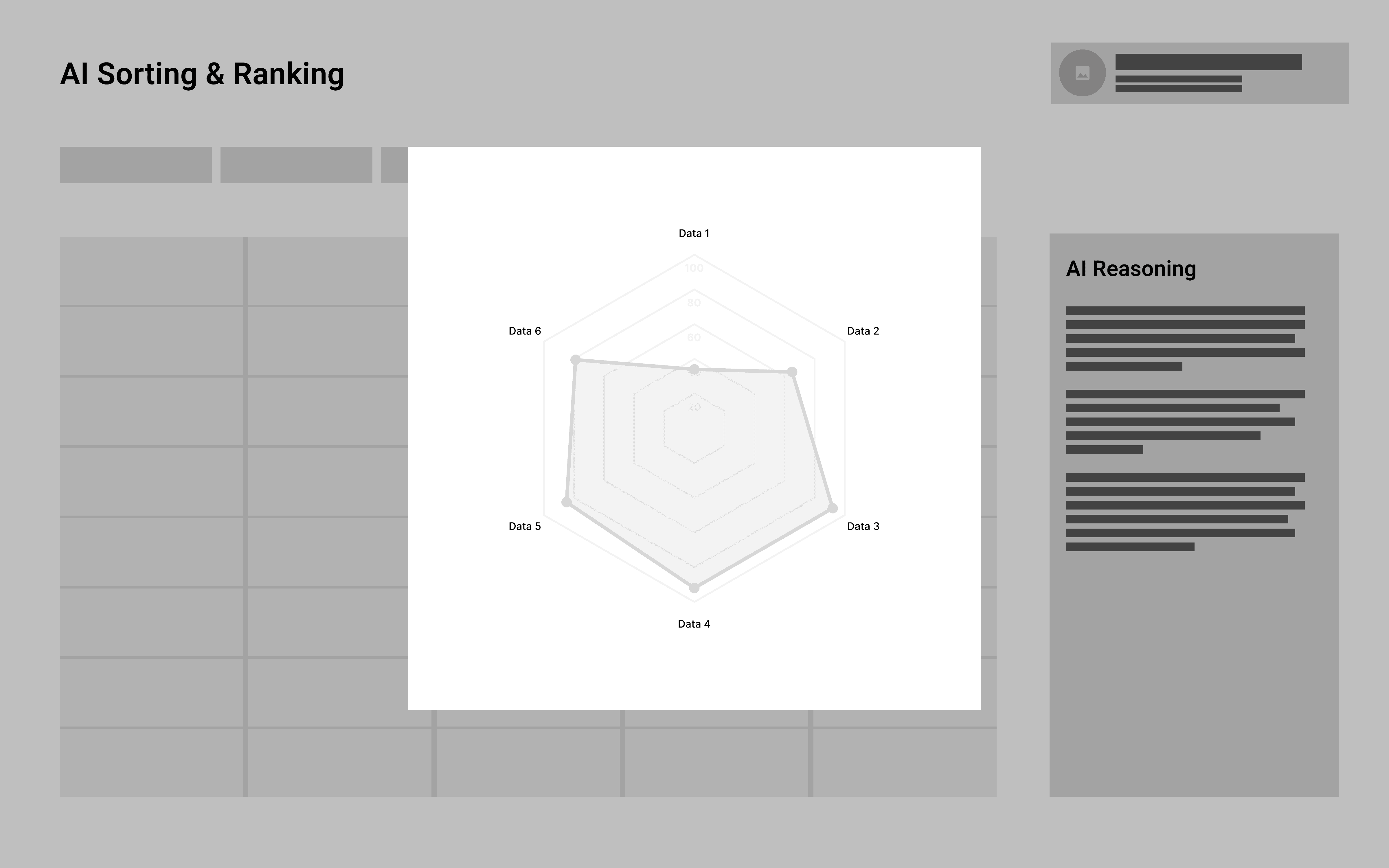
Lo-Fi Prototype
Login
Document Upload
AI Sorting & Ranking
Radar Chart (Explainability)
Lo-Fi Prototype
Login
Document Upload
AI Sorting & Ranking
Radar Chart (Explainability)
Hi-Fi Prototype
The Hi-Fi prototype for the AI University Admission System presents an intuitive interface for sorting applications efficiently. It includes AI-powered ranking, scholarship recommendations, and transparent decision-making. Features like an interactive dashboard, applicant insights, and a guided review process ensure fair and structured admissions. The system enhances efficiency while keeping human oversight in the loop.
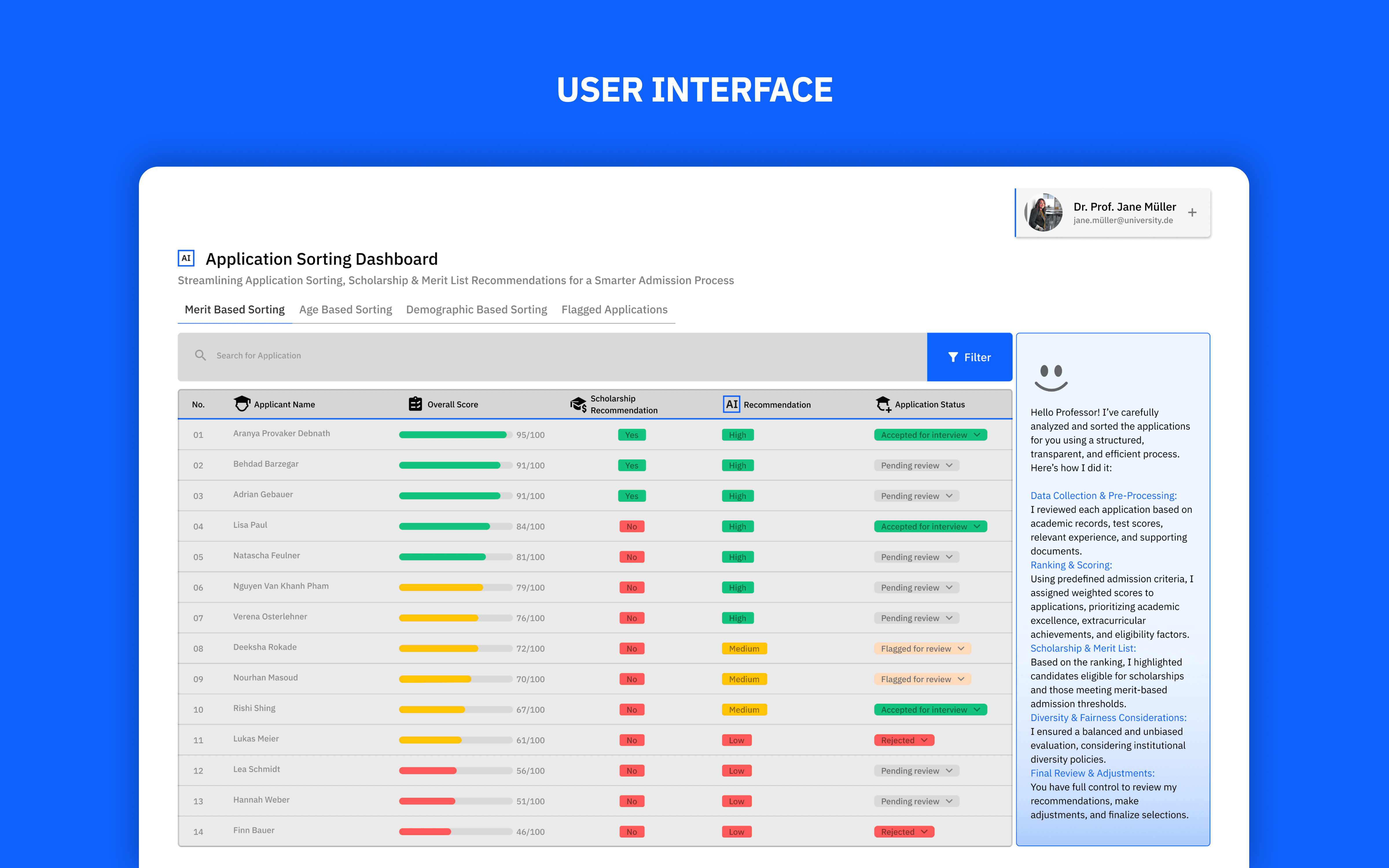
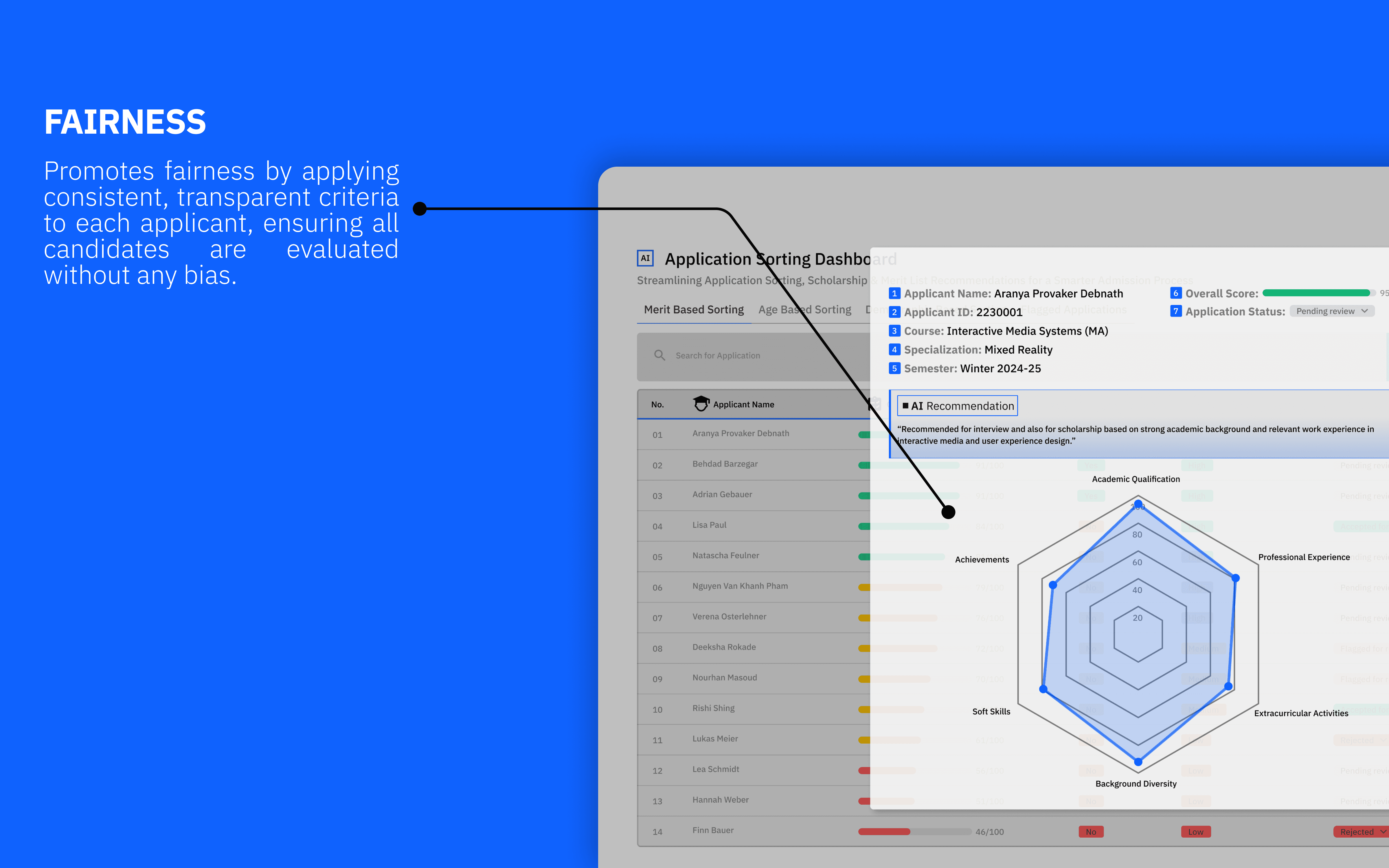
Hi-Fi Prototype
The Hi-Fi prototype for the AI University Admission System presents an intuitive interface for sorting applications efficiently. It includes AI-powered ranking, scholarship recommendations, and transparent decision-making. Features like an interactive dashboard, applicant insights, and a guided review process ensure fair and structured admissions. The system enhances efficiency while keeping human oversight in the loop.
Hi-Fi Prototype
The Hi-Fi prototype for the AI University Admission System presents an intuitive interface for sorting applications efficiently. It includes AI-powered ranking, scholarship recommendations, and transparent decision-making. Features like an interactive dashboard, applicant insights, and a guided review process ensure fair and structured admissions. The system enhances efficiency while keeping human oversight in the loop.